Redefining the Skyline: How Shin Takamatsu’s Vision Shaped the G.A.T.O. Tower
Redefining the Skyline: How Shin Takamatsu’s Vision Shaped the G.A.T.O. Tower
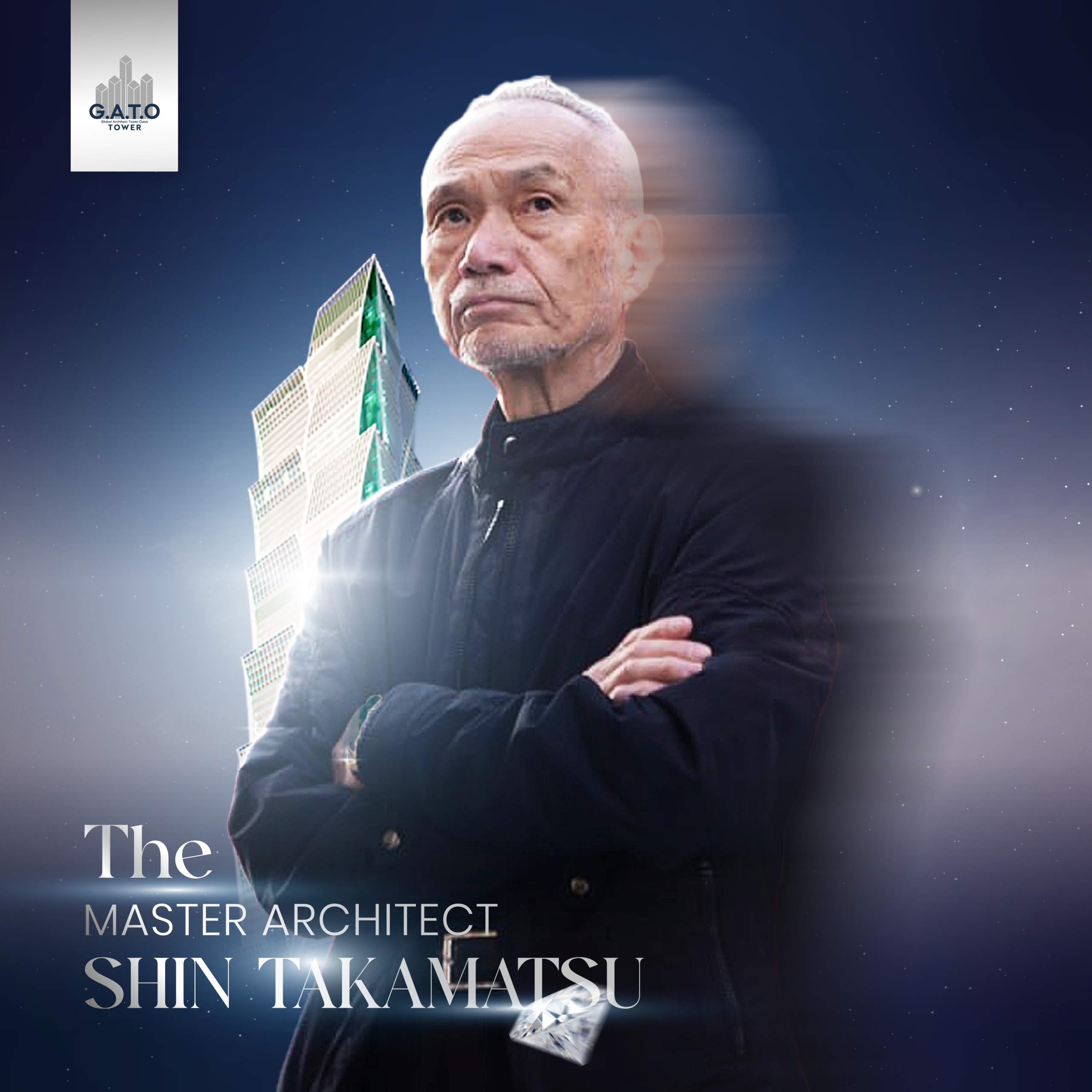
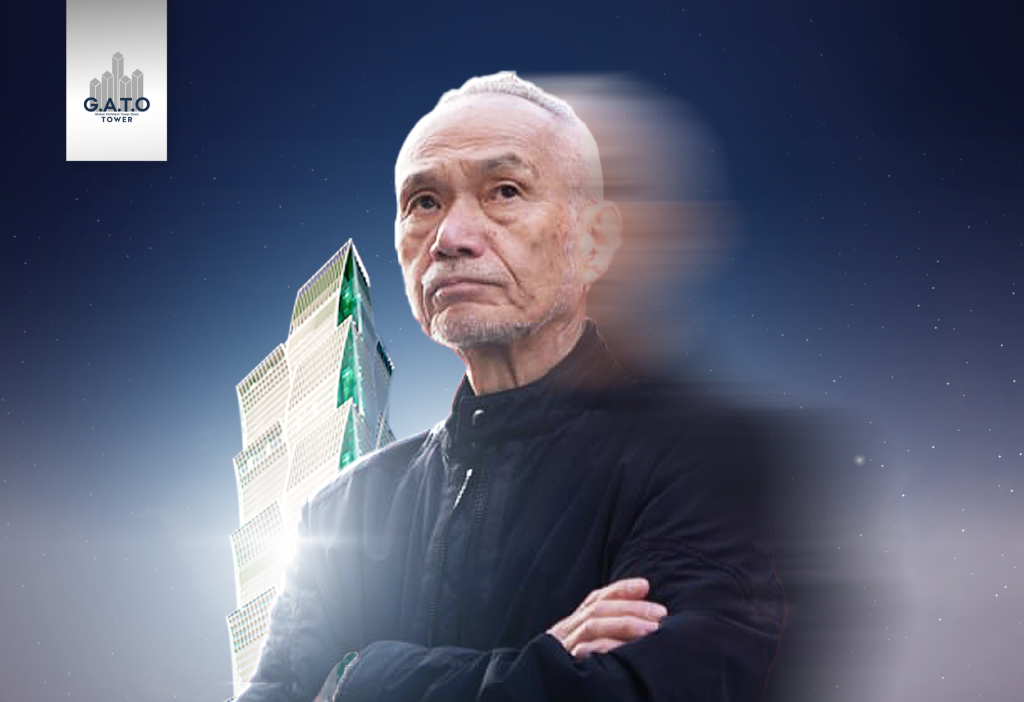
When we think of architecture that challenges the boundaries of human imagination, one name inevitably cuts through the noise: Shin Takamatsu. Known globally for creating some of the most provocative, futuristic, and structurally striking designs of the late 20th and early 21st centuries, the legendary Japanese architect has spent decades turning buildings into “symbolic events.”
Now, his signature philosophy has found a monumental new home in Phnom Penh, Cambodia, with the jaw-dropping design of the G.A.T.O. Tower.
If you’ve ever wondered how a structure can simultaneously feel like a piece of high-tech art and a fully functioning vertical metropolis, look no further than this collaboration between Takamatsu’s timeless vision and modern luxury urban living.

Who is Shin Takamatsu? The Visionary Behind the Concrete and Steel
Born in 1948, Shin Takamatsu rose to international fame during Japan’s economic and technological boom. While many of his peers pursued uniform, minimalist designs, Takamatsu took a sharp turn into the extraordinary.
His early works—like the locomotive-inspired Ark or the fortress-like Origin I—earned him a reputation as an architectural rebel. He didn’t just design buildings; he built “immobile machines” that blended
- Futuristic Cyberpunk Aesthetics: Structures that look like they stepped right out of a sci-fi masterpiece.
- Mechanical and Anthropomorphic Imagery: Rhythmic facades reminiscent of pistons, gears, and living entities.
- Deep Cultural Metaphors: Melding the precision of industrial engineering with the quiet, contemplative spatial geometry found in traditional Japanese aesthetics.
Takamatsu’s ultimate goal has always been to transform and elevate the context of a city, rather than just blending into it.
“There are two ways to deal with context. One is to harmonize… The second method would be to inlay a brilliant and complex knot of gold thread into the city to transform it. This is my method.” — Shin Takamatsu


Enter the G.A.T.O. Tower: Phnom Penh’s Sovereign Landmark
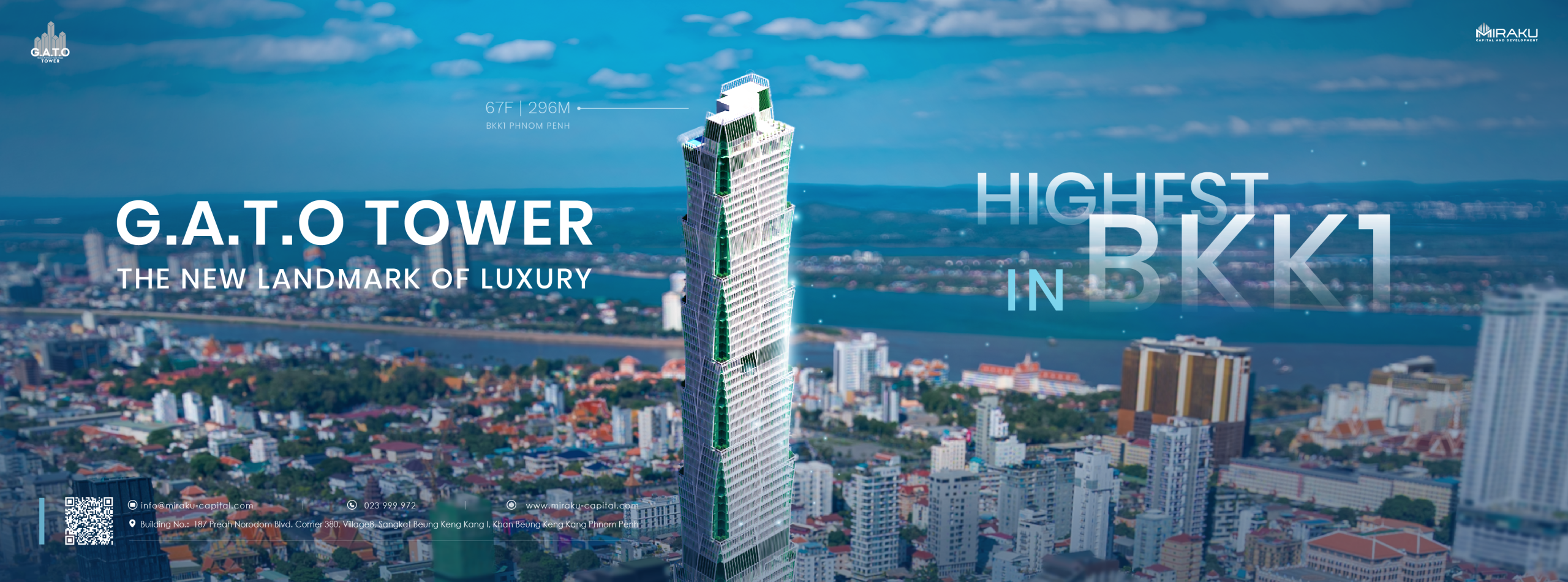
With the G.A.T.O. Tower, Takamatsu has woven his “gold thread” directly into the heart of Boeung Keng Kang 1 (BKK1), Phnom Penh’s most prestigious district. Developed by MIRAKU Capital & Development Co., Ltd., this 67-story mixed-use masterpiece is a stunning showcase of how Takamatsu’s bold, geometric precision can be adapted for a soaring, hyper-modern vertical city. 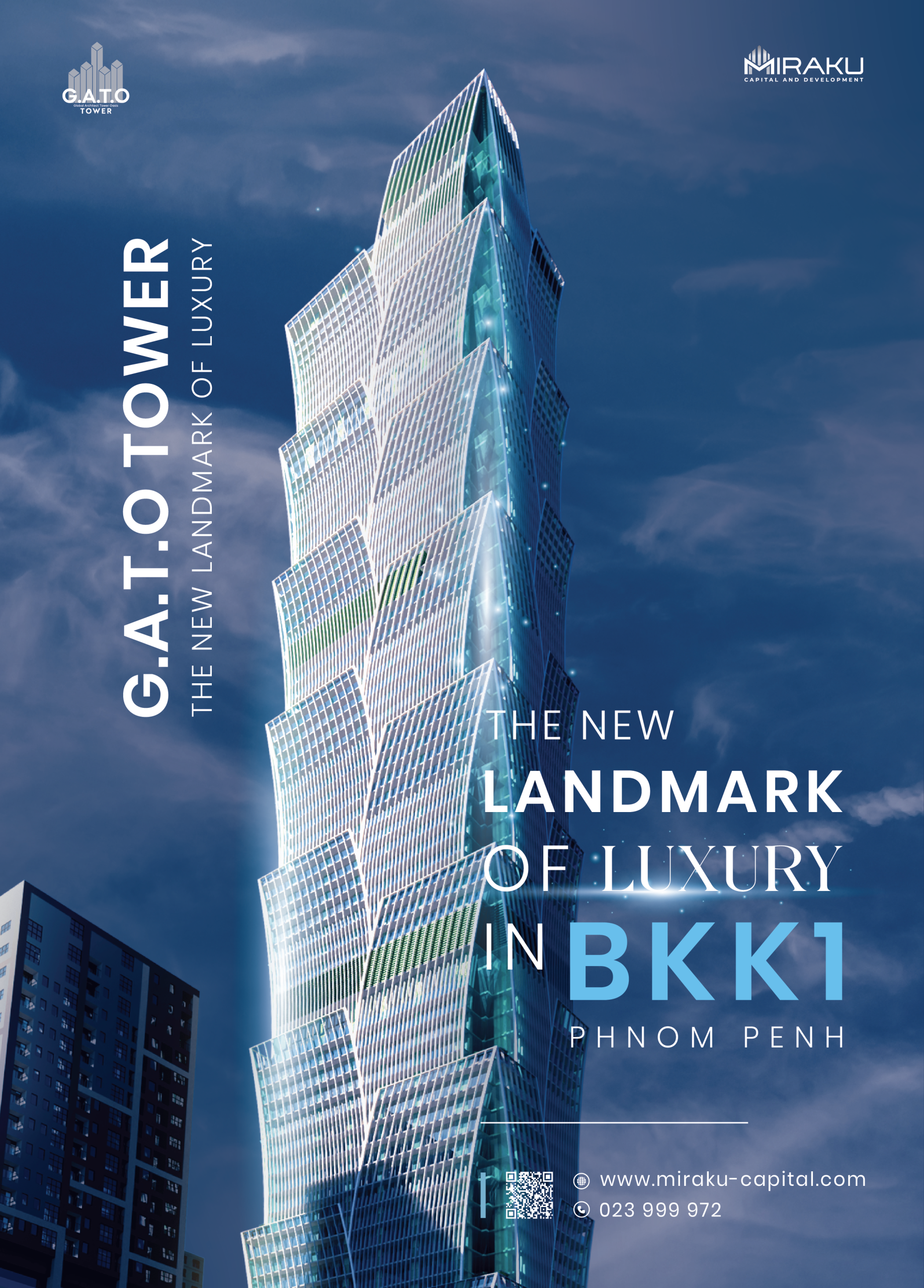
Standing as a striking 297-meter-tall monument, the G.A.T.O. Tower beautifully captures his philosophy of balance, rhythmic facade work, and undeniable presence.
The Anatomy of a Vertical City
True to Takamatsu’s ability to compose multi-layered, experiential spaces, the tower is intelligently zoned to separate public lifestyle energy from elite, private sanctuaries:
|
Building Sections |
Floors |
What It Houses |
|
The Arrival & Parking |
B1–B2 & 1F–7F |
Grand entrance lobbies and state-of-the-art parking facilities. |
|
The Luxury Hotel |
9F–25F |
A five-star international hotel featuring refined Japanese precision and luxury amenities. |
|
Elite Residences |
28F–66F |
High-end condominiums and ultra-exclusive Executive and Penthouse suites. |
|
The Crown Jewel |
67F |
An infinity pool, Sky Bar, Live House, and tropical Sky Garden floating above the clouds. |
Why G.A.T.O. Tower is the Ultimate Expression of Takamatsu’s Legacy
The G.A.T.O. Tower isn’t just a place to live; it is a live-in sculpture. It perfectly encapsulates why the design world celebrates Takamatsu:
1. Precision-Crafted Exclusivity
Takamatsu’s architecture has always rejected overcrowded uniformity. This is evident in the residential layout of G.A.T.O. Tower, where each floor features a heavily limited number of units to maximize privacy, structural tranquility, and panoramic 180-degree views of the capital.
2. The Interplay of Light and Space
Much like his acclaimed Shoji Ueda Museum of Photography in Japan, Takamatsu uses geometry to manipulate light. The tower’s facade and massive windows are designed to capture the brilliant Cambodian sun during the day while transforming into a glowing, rhythmic beacon on the skyline at night.
3. A Harmonious Blend of Cultures
What makes the G.A.T.O. Tower so magnificent is how it anchors Takamatsu’s disciplined, world-class Japanese engineering standards into the vibrant, modern spirit of Cambodia. It stands as a timeless monument to international collaboration.
The Future Has an Address
Scheduled to redefine luxury urban living completely by its completion in late 2030, the G.A.T.O. Tower stands as a masterclass in modern architecture. It reminds us that buildings don’t have to be boring boxes. In the hands of a true master like Shin Takamatsu, they can become monuments of pure energy, luxury, and human achievement.
Are you ready to see how high-concept Japanese architecture is shaping the future of global luxury?
Explore our deep dives into the G.A.T.O. Tower’s unique floor plans and investment opportunities in our next post!
 For more information:
 +855-023-999-972
 Telegram number: 070 604 777